
AIGIS
AIGIS Dispatch · Rapid CAD

Put the right unit in motion.

AIGIS gives command a shared view of missions, units, assignments, routes, and status. Responders create and take missions in Field when enabled. Authorized operators coordinate the response in OPS.

Built for rapid mission coordination in the field, command post, or EOC. It does not replace a full dispatch-center CAD.

Field · iOS and AndroidOPS · macOS and Windows
AIGIS OPS · Rapid CAD
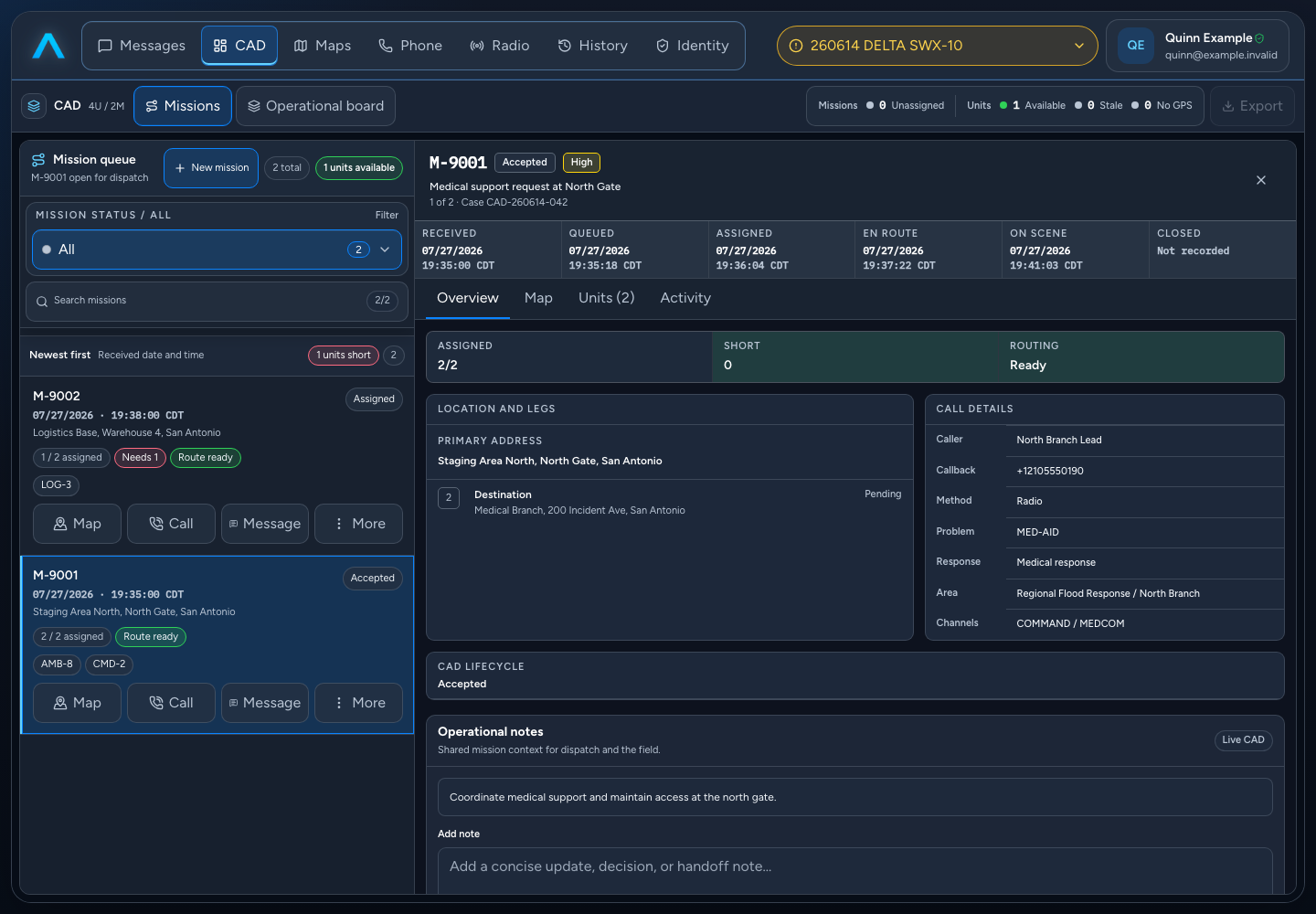
AIGIS OPS Rapid CAD workspace showing a mission queue, selected medical mission, response milestones, assigned units, locations, and call details using simulated data
Representative AIGIS OPS interface with simulated incident data. No production unit, responder, or mission records are pictured.
  • Mission queue

    Incident-scoped work and staffing state

  • Unit picture

    Availability, assignment, and location health

  • Assignment

    Permission and conflict checks

  • Response timing

    Routes, ETA, and operational milestones

One mission. Two operating surfaces.

Field and OPS work from the same mission record, with actions matched to each role and permission.

AIGIS Field

iOS and Android

The field starts and advances the work.

Responders can create a mission at the point of need, request assignment to their active unit when policy allows, and work from the same mission command sees in OPS.

  • Create from GPS, place search, a reported issue, or an operational area
  • Accept an assignment and follow route, status, and next-step context
  • Save supported mission and unit-status changes for retry when offline

AIGIS OPS

macOS and Windows

Command coordinates the response.

Operators capture incoming work, compare the incident roster, assign or unassign units, and follow mission progress from one command workspace.

  • Search the mission queue and operational unit roster
  • See staffing shortfalls, current assignments, stale location, and no-GPS state
  • Manage assignment, configured transitions, route context, and activity
Representative AIGIS Field interface with simulated incident data. The Create action requests assignment to the active unit; the incident profile and responder permissions determine whether it is allowed.
Rapid CAD workspace

See the queue, units, and mission together.

Operators can open a mission, see which units can respond, make an assignment, and follow progress without leaving the selected incident.

Mission intake and queue

Capture call nature, priority, units required, location, notes, and additional mission legs. Search and filter current work by state and staffing.

Operational unit picture

See unit status, current assignment, location freshness, and no-GPS conditions before committing a unit.

Guarded assignment

OPS checks incident scope, permissions, unit activity, existing assignments, terminal mission state, and conflicts before it accepts a change.

Route and response timing

Review route, distance, ETA, mission legs, and elapsed milestones when coordinates and routing data are available.

Decision support

Make the assignment with context.

AIGIS helps authorized operators compare eligible units using incident scope, required capabilities, and travel context.

Eligible

Start with units that can take the work.

Available, unassigned units inside the active incident and organization scope.

Capable

Match the mission requirements.

Filter candidates against the attributes required by the mission.

Practical

Compare the route and travel context.

Use ETA when available and approximate distance as a fallback.

The decision stays with command.

A recommendation never dispatches a unit on its own. An authorized operator reviews the context and makes the assignment.

Mission state and unit state answer different questions.

The mission records whether the work is staffed and complete. The unit reports its operational availability and response position. AIGIS keeps both visible without collapsing them into one status.

Mission

Staffing and outcome

  1. Unassigned
  2. Partially assigned
  3. Assigned
  4. Accepted
  5. Completed

Unit

Availability and movement

  1. Available
  2. Assigned
  3. En Route
  4. On Scene
  5. Available

Example configured workflows. Status names, order, reasons, permissions, and terminal steps can vary by incident profile.

Command control stays explicit.

Configured workflow

Statuses, reasons, fields, and terminal steps follow the incident profile.

Permission-aware action

Responder and operator permissions determine which changes are available.

Explicit route health

Route views distinguish current results from delayed, stale, or unavailable data.

Walk your mission flow through AIGIS.

Bring the mission types, unit model, statuses, routing needs, and permissions your operation uses today. We will map them to the Rapid CAD workflow.